
How Can a Folding Boxing Ring Transform Your Training Space and Improve Gym Efficiency
Article Summary: A folding boxing ring offers a practical solution for gyms, boxing clubs, event organizers, and home training facilities that need professional boxing equipment without permanently sacrificing valuable floor space. Panda Win provides folding boxing ring solutions featuring a heavy-duty carbon steel frame, modular folding construction, anti-slip EVA mats, padded columns, and convenient mobility options on selected models. This guide explores the key benefits, construction features, safety considerations, applications, and purchasing factors that help buyers choose the right folding ring for their facilities.
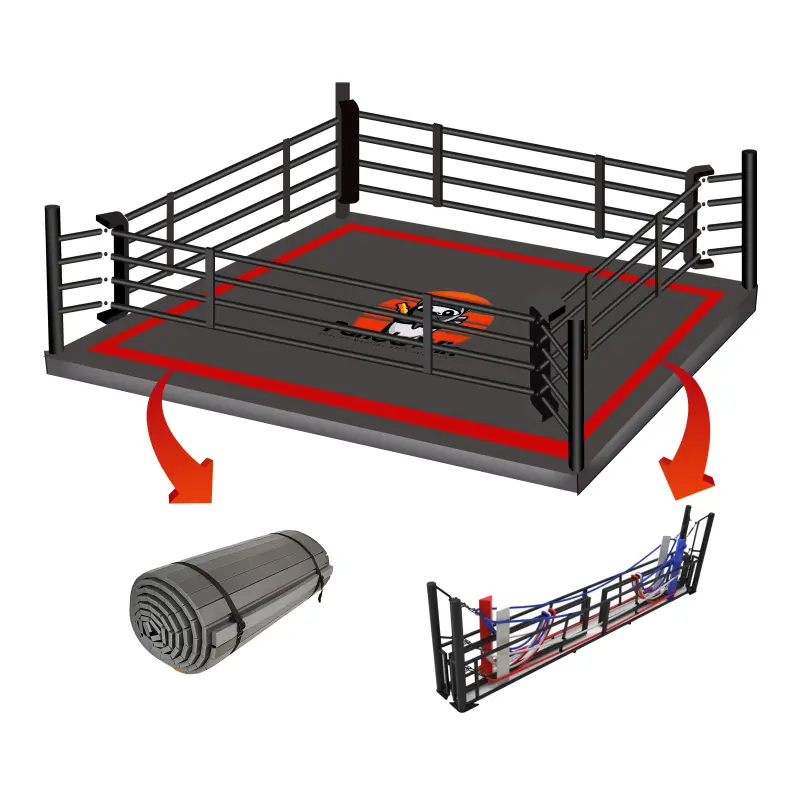
Table of Contents
1. What Is a Folding Boxing Ring?
2. Why Choose a Folding Boxing Ring?
3. Key Features and Construction
4. Folding Boxing Ring vs. Traditional Boxing Ring
5. Where Can a Folding Boxing Ring Be Used?
6. How to Choose the Right Folding Boxing Ring
7. Installation, Safety, and Maintenance Tips
What Is a Folding Boxing Ring?
A folding boxing ring is a specialized training structure designed to provide a dedicated boxing area while allowing the equipment to be folded, moved, or stored when it is not in use. Unlike a conventional fixed ring, which occupies a permanent portion of a gym, a folding model helps facilities adapt their floor plans to changing activities and operational requirements.
For gyms that host boxing classes alongside fitness sessions, martial arts training, or other sports programs, this flexibility can make a significant difference. A single training area can accommodate different activities throughout the day without requiring a permanent boxing installation.
Panda Win's folding boxing ring is designed around this practical requirement. Its construction combines a heavy-duty carbon steel frame, a modular folding structure, and professional anti-slip mats to support flexible training arrangements. Soft PU padding around the columns and selected mobility features further contribute to its practical design.
For buyers evaluating boxing equipment, the central consideration is not simply whether a ring can fold. It is whether the folding mechanism, structural strength, training surface, and safety features work together to provide a reliable training environment.
Why Choose a Folding Boxing Ring?
Investing in a folding boxing ring can help facilities improve space utilization, simplify venue management, and expand the range of activities they can offer. These advantages are especially valuable when a permanent installation is impractical.
1. Make Better Use of Limited Floor Space
Floor space is a major consideration for small and medium-sized gyms. A fixed boxing ring may limit the room available for strength training, group classes, or equipment storage. A folding design allows the training area to be reorganized when boxing sessions finish, subject to the model's folding and storage requirements.
This flexibility can help facility owners use their available space more efficiently without giving up the benefits of a dedicated boxing area.
2. Simplify Training Area Reconfiguration
Traditional rings can require substantial installation and dismantling work when a venue changes its layout. A folding structure is intended to make these transitions more convenient. Tool-free folding features and modular construction can reduce routine handling complexity, although the required personnel and operating procedure depend on the specific model.
3. Support Mobile and Temporary Events
Boxing demonstrations, community sports programs, promotional activities, and temporary training events often require equipment that can be transported and stored between uses. Selected folding ring models incorporate wheels or other mobility features that simplify movement within a venue.
Before arranging transportation to another location, buyers should confirm the ring's folded dimensions, weight, transport requirements, and whether disassembly is necessary.
4. Maintain a Professional Training Environment
Space efficiency should not come at the expense of stability or user protection. A well-designed folding boxing ring combines a robust frame with a secure locking system, suitable flooring, padded structural components, and properly tensioned ropes. These elements help create a defined training area for technical drills, supervised sparring, and other appropriate boxing activities.
What Key Features Should a Quality Folding Boxing Ring Have?
Evaluating the materials and construction details is essential when purchasing a folding boxing ring. The following features are particularly relevant to gyms, sports facilities, distributors, and professional equipment buyers.
Heavy-Duty Carbon Steel Frame
The frame provides the structural foundation of the ring. Panda Win's product description identifies heavy-duty carbon steel as the primary frame material, with reinforced folding joints designed to support structural stability.
A protective surface coating can help resist wear and corrosion during routine use. Buyers should also examine joint construction, locking components, load requirements, and maintenance recommendations before selecting equipment for high-frequency training.
Modular Folding Mechanism
A modular structure allows the ring to be folded for storage or reconfigured when the training area needs to serve another purpose. High-strength hinges and a stable locking arrangement are important because folding components must remain secure during use.
When reviewing a product, ask the supplier to explain the folding procedure, the space required for operation, the recommended number of operators, and the inspection routine for hinges and locks.
Anti-Slip EVA Mats
The training surface influences traction, comfort, and movement. Panda Win specifies 25 mm textured anti-slip EVA mats for its folding boxing ring. This surface is intended to improve grip during movement and help reduce slipping risks.
However, no mat can eliminate every training hazard. The surface should remain clean, dry when required by the manufacturer's instructions, securely positioned, and free of damaged or separated sections.
Padded Columns and Protective Ropes
Protective padding around columns and exposed structural areas helps reduce the risk of impact injuries. Panda Win describes soft PU padding on columns, shock-absorbing foam protection, and high-toughness ropes as part of its product design.
Buyers should verify the padding thickness, rope configuration, attachment points, corner protection, and availability of replacement components before ordering.
Optional Mobility and Customization
Some configurations include wheels to support movement, while product specifications and available options may vary. Facilities can also discuss dimensions, colors, branding, and other project requirements with the supplier where customization is available.
Folding Boxing Ring vs. Traditional Boxing Ring: What Is the Difference?
Both folding and traditional boxing rings can support structured boxing training. The main difference lies in how each design accommodates space, installation, and daily facility operations.
| Comparison Factor | Folding Boxing Ring | Traditional Fixed Ring |
|---|---|---|
| Space utilization | Can be folded or stored when not required, depending on the design | Generally occupies a dedicated area |
| Installation approach | Uses a folding structure and model-specific locking components | May require permanent or semi-permanent assembly |
| Venue flexibility | Suitable for facilities that regularly change their layouts | Best suited to venues with a stable, dedicated boxing area |
| Transportation | Selected models include mobility features to simplify handling | Moving the ring may require extensive dismantling |
| Storage requirements | Requires sufficient space for the folded structure and accessories | Usually remains installed in the training area |
| Initial planning | Requires consideration of folding clearance, storage, and operating procedures | Requires consideration of permanent footprint and installation conditions |
| Potential applications | Multi-use gyms, temporary events, flexible training facilities, and suitable home gyms | Dedicated boxing clubs, permanent training facilities, and competition venues |
The best option depends on the facility's operating model. A dedicated boxing academy with a permanent training floor may prefer a fixed installation, while a multi-purpose gym may benefit more from a folding design. Buyers should compare total ownership costs, including installation, storage, maintenance, transportation, and replacement parts.
Where Can a Folding Boxing Ring Be Used?
A folding boxing ring can support different training and event environments, provided the selected configuration is suitable for the intended activity and available space.
- Small and medium-sized gyms: Reconfigure the floor between boxing sessions, fitness classes, and other activities.
- Boxing clubs and training academies: Establish a defined practice area without necessarily committing to a permanently installed ring.
- Sports event organizers: Evaluate portable ring solutions for demonstrations, promotional events, and temporary boxing activities.
- Schools and community sports centers: Make shared indoor facilities more adaptable to different programs.
- Home training facilities: Consider a folding ring when the available room can accommodate the fully opened structure and safe movement around it.
- Equipment distributors: Offer a space-saving option to customers whose facilities have changing layouts or storage limitations.
For public events and competitive use, the ring must also meet the relevant event organizer's requirements, local safety rules, and applicable competition specifications. A folding design alone does not establish compliance with every boxing federation or event standard.
How to Choose the Right Folding Boxing Ring
Selecting the right ring involves more than comparing purchase prices. A clear assessment of facility requirements can help prevent costly mismatches between the equipment and its intended environment.
Measure the Complete Available Area
Measure the installation area and consider the ring's external dimensions, internal fighting area, rope clearance, entry points, and circulation space. Also establish the space required to fold, unfold, and move the structure safely.
Do not rely on the dimensions of the fighting surface alone. Coaches, athletes, and staff need adequate clearance around the ring, and the folded unit must fit through access routes and into the intended storage location.
Match the Structure to Training Intensity
Different facilities have different operational demands. Recreational classes, frequent sparring sessions, and organized competitions may require different structural specifications. Confirm the intended use, design loads, frame construction, rope arrangement, and locking system with the supplier.
Evaluate Safety and Maintenance Requirements
Check the mat surface, corner padding, ropes, structural joints, and locking components. Ask whether replacement padding and other wear components are available and whether the supplier provides operating and maintenance documentation.
Discuss Customization and Procurement Details
For wholesale orders or commercial projects, buyers should confirm the following details before approving production:
- Required external dimensions and usable fighting area.
- Frame material, coating, folding structure, and locking arrangement.
- Mat material, thickness, surface texture, and replacement options.
- Rope configuration, corner protection, and accessory package.
- Available colors, logo placement, and customization options.
- Packaging, shipping arrangements, lead time, and after-sales support.
Request a written quotation and a confirmed specification sheet so that the delivered product matches the facility's requirements.
How Should a Folding Boxing Ring Be Installed and Maintained?
Even a well-designed folding boxing ring requires correct operation and regular inspection. A consistent maintenance routine helps preserve its structural condition and supports safer training.
- Prepare the floor: Choose a level, suitable surface that can support the equipment. Remove obstacles from the operating and storage areas.
- Follow the manufacturer's instructions: Open the structure in the prescribed sequence and engage every required lock or securing component before use.
- Inspect the frame: Check hinges, joints, fasteners, and visible welds for looseness, deformation, or damage.
- Check the training surface: Look for uneven mats, loose sections, contamination, and other conditions that could interfere with footing.
- Examine ropes and padding: Verify rope condition, attachment security, corner protection, and padding integrity before each session.
- Clean and store correctly: Follow the recommended cleaning procedures and store the folded ring in a dry, appropriate location when it is not in use.
Never allow athletes to train on a ring with damaged locking mechanisms, unstable structural components, loose ropes, or compromised padding. Remove defective equipment from service until it has been inspected and repaired by qualified personnel.
Frequently Asked Questions About Folding Boxing Rings
1. What is the main advantage of a folding boxing ring?
Its main advantage is space flexibility. The ring can be folded and stored when it is not needed, allowing a suitable venue to use the same floor for other activities. Actual storage requirements depend on the selected model.
2. Is a folding boxing ring stable enough for regular training?
A properly designed and correctly secured model can support its specified training applications. Buyers should verify the frame construction, folding locks, rope system, intended use, and manufacturer guidance rather than assuming all folding rings offer the same performance.
3. What materials are used in Panda Win's folding boxing ring?
Panda Win describes a heavy-duty carbon steel frame, 25 mm textured anti-slip EVA mats, padded columns, and protective ropes. Buyers should request the latest technical specifications to confirm the configuration and available options for their order.
4. Can a folding boxing ring be customized?
Customization may be available depending on project requirements and production options. Contact the supplier to discuss dimensions, colors, branding, materials, and accessory requirements before placing an order.
5. Is a folding boxing ring suitable for home gyms?
It can be suitable for a home gym if the room accommodates the opened ring, safe movement around it, folding operations, and storage. Buyers should also consider ceiling height, floor suitability, access routes, and noise or impact considerations.
6. How do I maintain a folding boxing ring?
Inspect the frame, hinges, locks, ropes, mats, and padding regularly. Clean the equipment according to the manufacturer's instructions, address wear promptly, and keep the ring out of service if any structural or safety-related component is damaged.
7. What should buyers confirm before ordering wholesale?
Confirm the dimensions, materials, folding mechanism, safety features, customization options, packaging, delivery schedule, warranty terms, and availability of spare parts. A written quotation and product specification sheet help establish clear purchasing expectations.
Conclusion: Is a Folding Boxing Ring the Right Investment?
A folding boxing ring is a practical choice for facilities that need to balance professional boxing training with efficient space management. Its value comes from combining a space-saving structure with dependable frame construction, suitable training surfaces, protective padding, and a folding system that fits the venue's daily workflow.
For gyms, boxing clubs, event organizers, and equipment distributors, Panda Win offers a folding boxing ring designed around these needs, featuring a heavy-duty carbon steel frame, anti-slip EVA mats, and a modular folding structure. Before making a purchasing decision, assess your available space, intended training intensity, storage conditions, and customization requirements to ensure the equipment fits your project.
If you are looking for a dependable folding boxing ring for a gym, sports facility, or wholesale equipment project, explore the Panda Win folding boxing ring and discuss your specifications with the team. Contact Panda Win today to request product details, confirm available configurations, and obtain a tailored quotation. Please contact us to find a space-saving boxing ring solution that aligns with your facility requirements and business goals.
Previous:No News