
For professional MMA venues, combat sports clubs, and event organizers, choosing the right competition structure directly affects athlete safety, venue presentation, installation efficiency, and long-term operating value. PANDA WIN develops the Platform Octagonal Cage as a professional combat-sports solution with a durable elevated platform, modular steel construction, customizable finishes, and a design intended for competition, intensive training, and commercial events.
Article Summary: A platform-based octagonal cage combines an enclosed fighting area with a raised, load-bearing structure designed for professional use. Key considerations include frame strength, connection methods, protective netting, surface traction, corrosion resistance, installation requirements, customization, and after-sales support. This guide explains the construction features and practical applications of a professional octagonal cage so buyers can evaluate equipment according to venue requirements, event format, athlete safety, and operational needs.
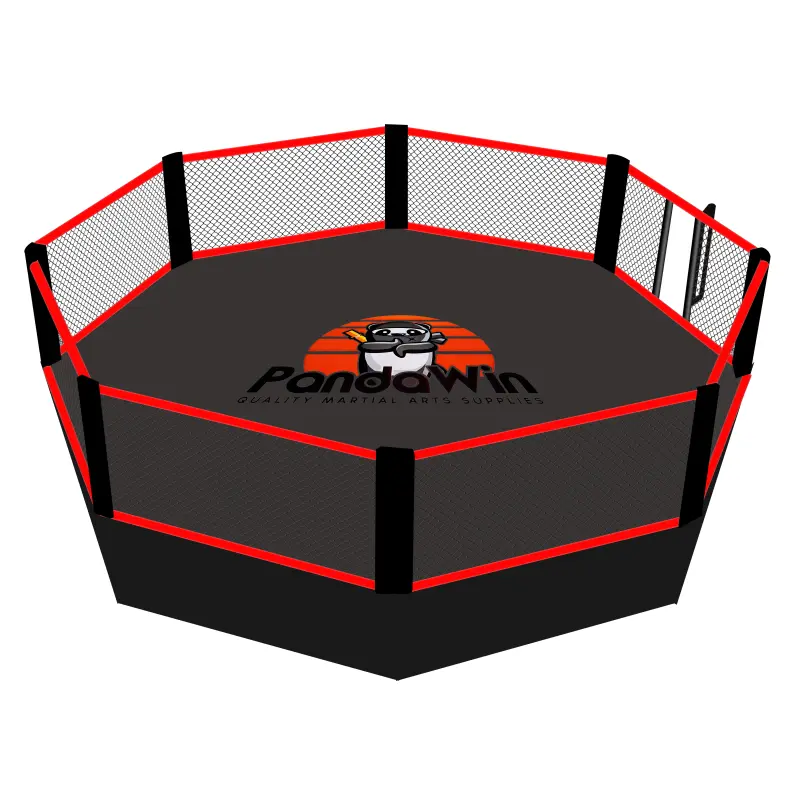
Table of Contents
- What Is a Platform Octagonal Cage?
- What Are the Key Construction Features?
- Key Specifications at a Glance
- How Does the Structure Support Safety and Performance?
- Where Can a Platform Octagonal Cage Be Used?
- What Customization Options Should Buyers Consider?
- How Should Buyers Evaluate a Professional Cage?
- Frequently Asked Questions
What Is a Platform Octagonal Cage?
A Platform Octagonal Cage is a raised combat-sports enclosure designed to provide a defined and stable fighting area for MMA competitions, high-intensity training, demonstrations, and commercial sporting events. Unlike a floor-mounted cage, its structure incorporates a dedicated elevated platform, creating a more recognizable competition environment while providing a substantial foundation for the cage system.
The design combines a structural steel frame, octagonal net enclosure, protective surface treatment, and a PVC competition mat. According to the product specifications, the main frame uses 50 × 50 × 1.5 mm thickened square steel. The frame is assembled using bolted connections rather than relying solely on permanent welded construction, supporting faster installation, dismantling, and modular transportation.
For buyers comparing different octagonal cage solutions, the platform configuration is particularly relevant when venue presentation, elevated positioning, event visibility, and professional competition requirements are important.
What Are the Key Construction Features?
Main Steel Frame
The frame is one of the most important components because it carries the cage structure and contributes to overall stability. The 50 × 50 × 1.5 mm square steel construction provides a defined structural basis, while precision-drilled connections and rust-resistant bolts help create a rigid assembled system.
A bolted design can also offer practical advantages for facilities that need to transport or reconfigure equipment. Instead of treating the cage as a permanently installed structure, operators can approach it as a modular system that can be assembled, dismantled, and transported according to event requirements.
Heavy-Duty Net Frame
The enclosure uses heavy-duty steel wire with a smooth coated finish. This surface treatment is intended to reduce abrasion risks while creating a consistent enclosure around the fighting area. Galvanized posts and borders provide additional resistance against corrosion, which is particularly useful for facilities operating in humid or high-temperature environments.
PVC Cover Mat
The mat is another critical component because athletes need a stable surface during movement, takedowns, grappling, and striking. The PVC mat is designed with slip and static resistance in mind. It can also be customized with event graphics, logos, or other visual elements, turning the fighting surface into part of the venue's branding system.
Key Specifications at a Glance
When evaluating professional combat-sports equipment, specifications should be reviewed alongside the intended venue, event format, installation conditions, and expected usage frequency. The following table summarizes the principal construction details available for this cage design.
| Component | Specification / Feature | Practical Benefit |
|---|---|---|
| Main Steel Frame | 50 × 50 × 1.5 mm square steel | Provides a rigid structural foundation |
| Frame Connection | Precision-drilled bolted construction | Supports assembly, dismantling, and modular transport |
| Net Frame | Heavy-duty steel wire | Creates a durable enclosed fighting area |
| Posts & Borders | Galvanized finish | Improves resistance to rust and environmental exposure |
| Surface Mat | PVC with slip and static resistance | Supports athlete stability during movement |
| Surface Branding | Custom logos and event graphics | Strengthens event and venue branding |
| Exterior Finish | Customizable powder coating | Supports durability and venue-specific appearance |
How Does the Structure Support Safety and Performance?
A professional fighting enclosure needs to balance structural stability with athlete movement. During MMA training or competition, athletes may strike, grapple, push against the perimeter, perform takedowns, and move rapidly across the mat. Therefore, equipment selection should consider the complete system rather than focusing on a single material.
The structural design contributes to performance through several elements:
- Rigid steel construction: A properly assembled steel frame provides the structural foundation for the cage.
- Secure connections: Precision-drilled bolted joints help maintain structural integrity while allowing modular assembly.
- Protective enclosure: Heavy-duty steel wire forms the surrounding cage boundary.
- Smooth surface treatment: The coated wire is designed to reduce abrasion concerns.
- Stable mat surface: PVC flooring provides a defined training and competition surface.
- Corrosion-resistant components: Galvanized posts and borders are suitable for demanding environmental conditions.
It is important for facility operators to follow the manufacturer's installation instructions and applicable local event or sporting regulations. Proper installation, inspection, maintenance, and venue preparation remain essential regardless of cage construction.
Where Can a Platform Octagonal Cage Be Used?
The elevated configuration is suitable for environments where the cage needs to function as both sports equipment and a central event structure. Its applications can extend beyond routine gym training.
Professional MMA Competitions
Competition organizers can use a raised octagonal cage as the central stage for professional bouts. The elevated configuration creates a visually distinct competition area and can help separate the fighting surface from surrounding venue operations.
Combat Sports Training Facilities
MMA gyms and combat clubs can use the cage for repeated high-intensity training. The enclosed structure provides a dedicated environment for practicing striking, grappling, takedowns, cage positioning, and other sport-specific movements.
Commercial Demonstrations and Events
Fitness exhibitions, promotional events, martial arts demonstrations, and commercial sporting showcases can benefit from a professional-looking cage. Custom graphics and powder-coated finishes can help integrate the equipment into an event's visual identity.
Multi-Purpose Sports Venues
For venues that host different events throughout the year, modular construction can be particularly useful. Equipment that can be assembled and dismantled more efficiently may simplify storage, transportation, and venue conversion.
What Customization Options Should Buyers Consider?
Professional sports venues rarely have identical layouts. Available floor space, audience positioning, event branding, transportation access, and installation conditions can all affect the final configuration. Panda Win Sports states that its cage solutions can be customized according to specific event rules and venue layouts.
Potential customization considerations include:
- Venue dimensions: Confirm the available installation area before finalizing the cage configuration.
- Visual identity: Consider powder-coating colors and branded graphics that match the venue or event.
- Mat graphics: Logos, promotional artwork, and event designs can be incorporated into the mat.
- Installation conditions: Review access routes, floor conditions, assembly space, and storage requirements.
- Event requirements: Confirm the applicable competition rules and technical requirements before production.
- Transportation: Modular construction can be advantageous when equipment must be moved between locations.
Buyers should provide accurate venue drawings and event requirements during the quotation stage. This allows the manufacturer to evaluate the intended configuration before production.
How Should Buyers Evaluate a Professional Cage?
Price alone is rarely sufficient when purchasing equipment intended for repeated professional use. A more useful evaluation process examines construction, materials, customization, installation, quality control, and service together.
Before placing an order, buyers should check:
- Steel frame dimensions and material specifications
- Connection and assembly methods
- Net and protective surface treatment
- Mat material and traction characteristics
- Corrosion-resistance requirements
- Venue dimensions and installation conditions
- Customization requirements for branding
- Applicable competition and safety requirements
- Packaging and transportation arrangements
- Installation guidance and after-sales support
Another important consideration is supplier communication. A professional combat sports equipment manufacturer should be able to discuss the intended application, venue requirements, configuration, customization, logistics, and installation process rather than simply quoting a standard product.
Panda Win Sports describes its manufacturing approach as involving strict quality control across components, from the main frame through surface finishes. The company also provides one-to-one customization, installation guidance, logistics updates, and after-sales support for customers purchasing combat sports equipment.
Frequently Asked Questions
1. What is the main difference between a platform cage and a floor cage?
A platform cage is installed on an elevated load-bearing platform, while a floor cage is positioned directly on the existing floor. The platform configuration can create a more distinctive competition stage and may be preferred for professional events where elevated presentation is part of the venue design.
2. What material is used for the main frame?
The main frame described for this model uses 50 × 50 × 1.5 mm thickened square steel. Precision-drilled bolted connections are used to assemble the structural frame.
3. Can the cage be customized?
Yes. Customization can include venue-specific configurations, powder-coating finishes, mat graphics, logos, and event branding. Buyers should provide their venue layout and technical requirements before production.
4. Is the Platform Octagonal Cage suitable for MMA training?
Yes. The design is intended for professional MMA competition as well as high-intensity training. Its enclosed octagonal configuration provides an environment for practicing striking, grappling, takedowns, and cage-based movement.
5. Can the cage be dismantled for transportation?
The bolted modular frame is designed to support quick setup, breakdown, and modular transportation. The exact logistics and installation process should be confirmed according to the selected configuration and venue conditions.
6. How can buyers choose the right configuration?
Start with the venue dimensions, intended use, event requirements, installation conditions, branding needs, transportation plan, and applicable sporting regulations. Sharing these details with the manufacturer can help determine a suitable configuration.
Final Thoughts
A professional octagonal cage is more than a perimeter enclosure—it is an integrated system involving structural steel, protective netting, surface materials, elevated support, customization, installation, and ongoing service. For professional competitions, demanding training environments, and commercial events, evaluating each of these elements can help buyers select equipment that matches their operational requirements. If you are planning a new MMA venue, upgrading an existing training facility, or preparing equipment for an upcoming combat-sports event, contact us at Panda Win Sports to discuss your venue layout, customization requirements, and professional cage solution.