

What's Actually Inside an MMA Octagon?
You train in one, you watch fights every week, or maybe you're looking to buy one — but have you ever thought about how these cages are actually built? Most people haven't. You step inside, the door closes, and that's all you notice.
Truth is, every octagon comes down to five core systems. Here's the real breakdown.
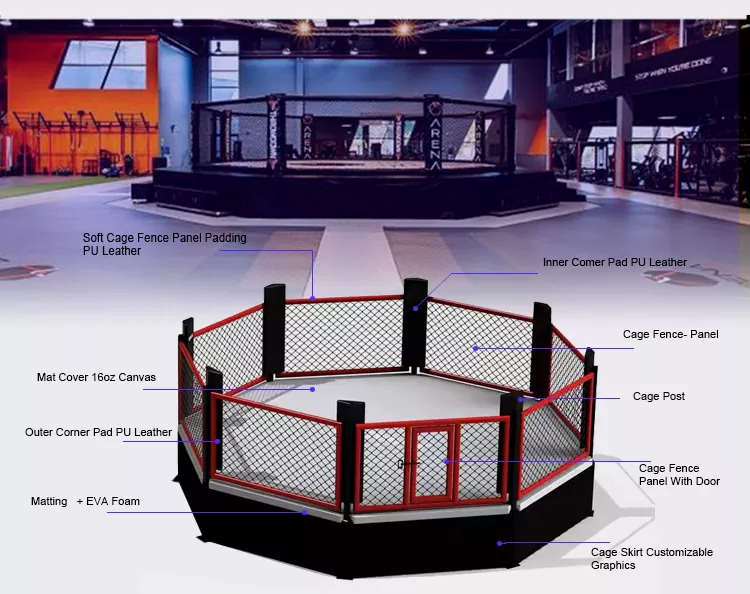
The Steel Frame
Eight vertical posts at each corner, powder-coated to prevent rust. Top rails lock the mesh in place; base rails anchor everything to the platform. Sounds basic, but cheap steel or bad welds will fail the moment someone gets slammed into the fence. Elevated cages need heavy triangular cross-bracing underneath to absorb that impact. Floor-standing versions skip most of that — lighter, cheaper, but you lose the pro-arena look. Corner post padding isn't optional either. One knee to bare steel can end a career.
The Mesh Walls
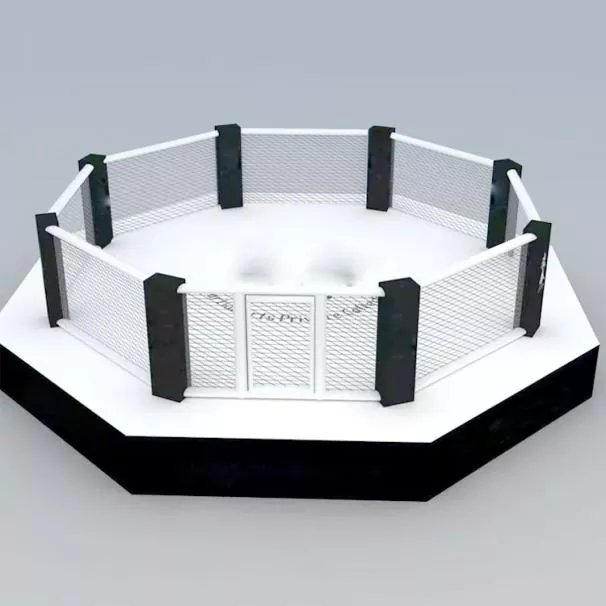
Eight mesh panels plus gate sections form the enclosure. The chain-link is PVC-dipped — that coating stops it from shredding skin and cushions impact when fighters hit the cage. Panels bolt together on-site, no welding needed. Two opposing gates with lock latches handle entry and exit. High-density foam wrapped in vinyl covers the rails. Skip that padding and cage clinches turn dangerous fast.
The Platform
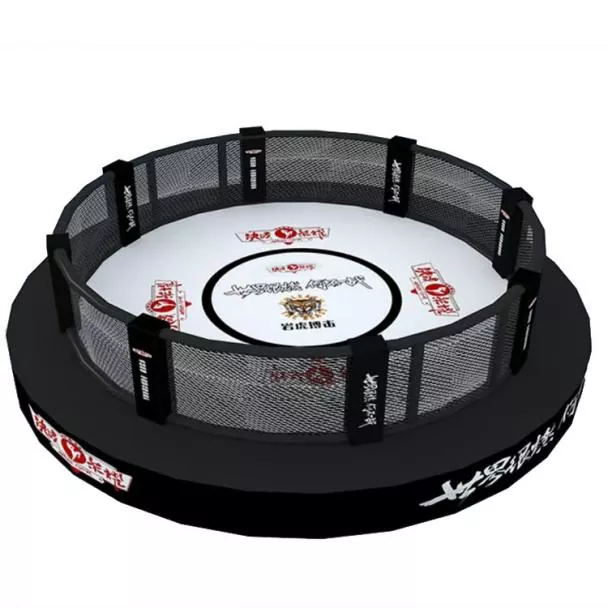
Waterproof plywood forms the rigid base under your mats. Cheap timber develops soft spots within months. Pro cages extend the platform outward for a referee walkway — seems minor until you're running an event and need the space. A fabric apron hangs around the edge to hide the steel and show off branding.
What's Under Your Feet
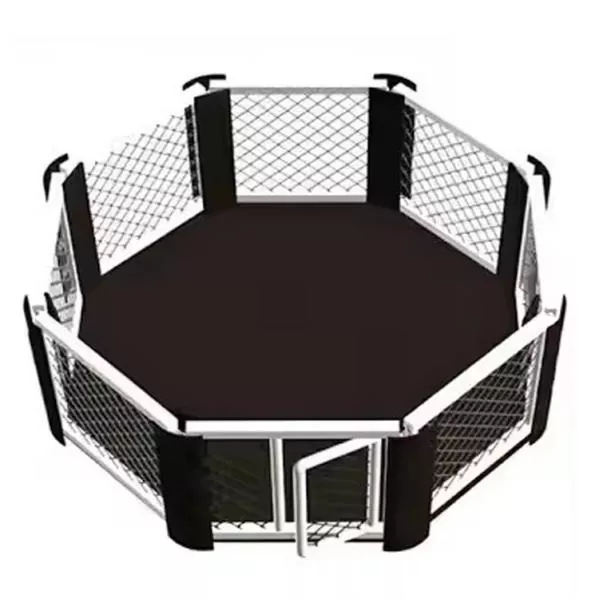
Closed-cell EVA foam sits between the plywood and the top surface, compressing on impact to protect joints. The canvas or vinyl layer on top needs grip, sweat resistance, and easy cleaning. Custom UV printing puts your logo where every camera can see it.
Extras That Matter
Thick corner post pads absorb impact and double as branding space. Elevated setups need stairs with anti-slip treads — some suppliers offer red and blue options to match fighter corners. Small detail, big visual upgrade.
Which One Do You Need?
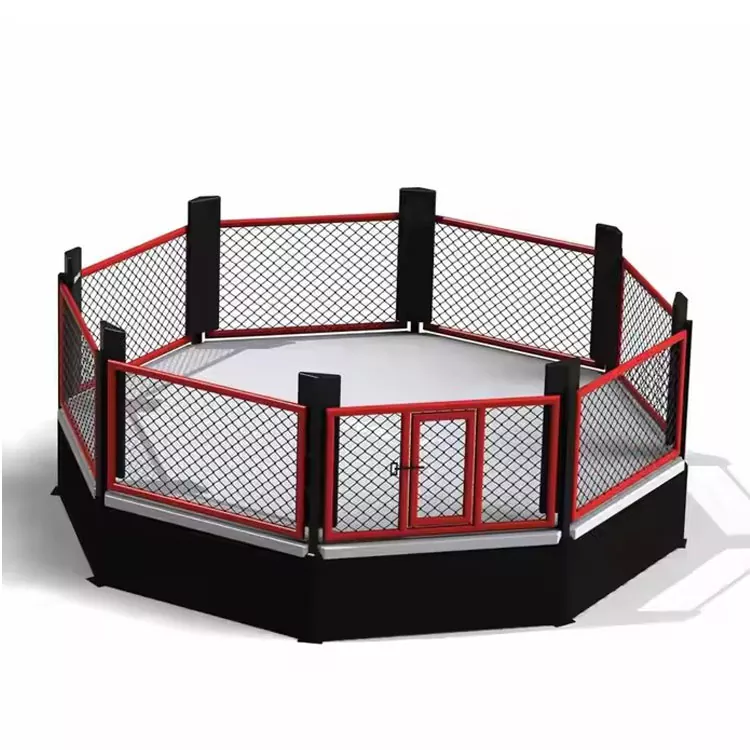
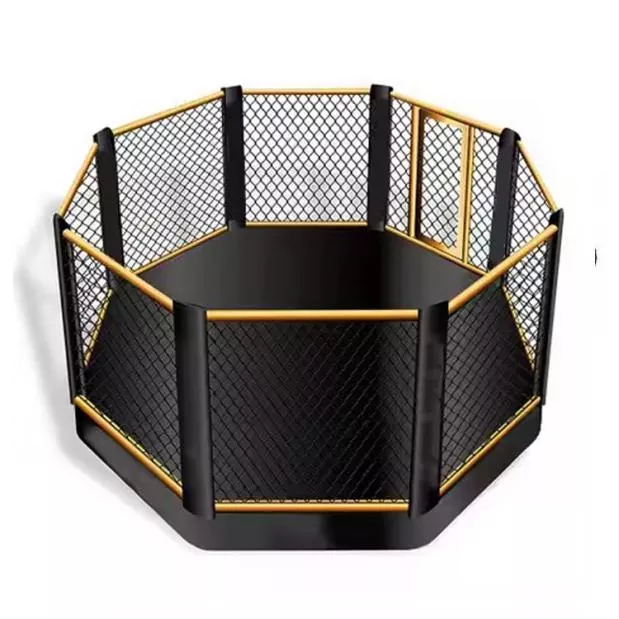
Elevated Octagon — 40 to 120 cm off the ground with full support framing and an outer walkway. Standard for pro events and commercial gyms. Looks intimidating and gives officials room to work.
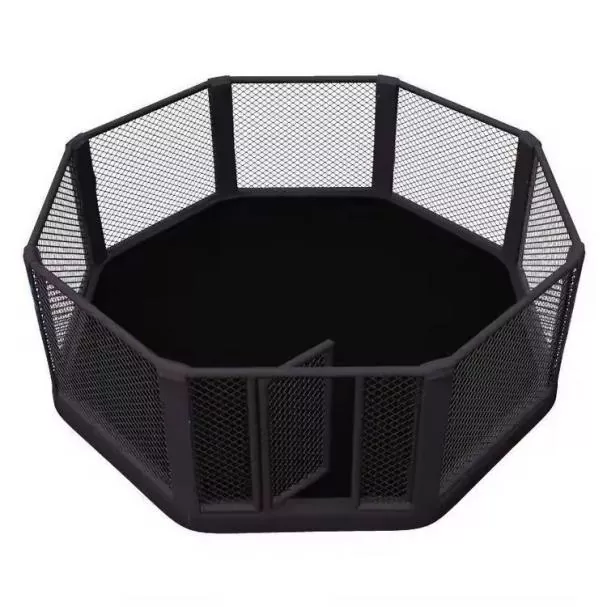
Floor-Standing Octagon — No lift, no complex frame. Sits directly on your gym floor. Costs less, takes less space, still delivers the real deal.
Five systems, two formats. Now you know what's holding it all together — and what's keeping you safe.